COVER STORY · JJ VS TOYOTA
Settled & Unsettled
Same collision. Two injured people. One claim reportedly settled. One man still fighting to be heard.
A participant’s account, examined alongside supplied court filings. Allegations remain disputed.
THE BIG QUESTION · LET’S TALK ABOUT IT
Should your ability to afford the fight determine whether your case gets heard?
One collision. Two injured people. One claim reportedly settled. One still unresolved. When the money runs out before the dispute is resolved, is the outcome about the evidence—or who can afford to keep going?
Different claims can justify different outcomes. What evidence would distinguish a legitimate difference from unequal treatment?
The crash ended. His fight did not.
Before there was a case number, there was a man strapped into medical restraints, his face injured, trying to get through the aftermath of a collision.
The photograph is difficult to look at. Jrmar “JJ” Jefferson wants people to look beyond it.
He wants them to understand what he says came next: difficulty getting continuing care, attorneys who stopped representing him, hundreds of requests for help, and the slow exhaustion of the money he had available to keep going.
Then there is the difference he cannot put aside. Jefferson says Lisa Garcia, the driver of the vehicle in which he was riding, settled her claim with Toyota. He says his own claim remains unresolved.
Two people injured in the same collision. Two very different paths afterward.
For Jefferson, the question is not simply why one case reportedly settled. It is whether a person without stable housing, strong financial resources, or continuing legal representation can afford to get his own evidence heard.
That is the story behind Settled & Unsettled.
When recovery comes with barriers
The collision happened on September 27, 2020, in Sacramento, California. Jefferson identifies Garcia as the driver of the Toyota Highlander in which he was a passenger.
He says he was experiencing homelessness at the time. He describes limited insurance coverage and difficulty obtaining continuing treatment during the COVID-19 pandemic and afterward. In his account, Garcia had better access to insurance, care, and legal representation.
This publication has not independently established those comparisons or the reasons for particular treatment decisions. What Jefferson describes is the strain of trying to recover while also trying to find help.
Getting through an emergency is one thing. Returning for care, gathering records, finding representation, and paying to pursue a claim can become another struggle entirely. Jefferson says that second struggle has stretched across years.
His story asks readers to consider the person behind the paperwork: someone who says he was injured, who believes the vehicle’s safety systems failed him, and who is still trying to secure the resources to prove his allegations.
After the emergency room, the symptoms remained.
The records supplied for this update add something important to Jefferson’s account: a documented sequence of emergency treatment and later evaluations. They describe more than the damage to a vehicle.
September 27, 2020: UC Davis emergency records document an eyelid laceration repaired with four sutures. The emergency history records a head injury and loss of consciousness. The physician’s discharge summary reports no acute injury on imaging and directs him to follow up with a primary-care provider. Those records show that he received emergency care; they do not establish that his treatment was inferior to Garcia’s.
October 2–3, 2020: Jefferson returned to UC Davis. The encounter records continuing brain fog, headaches, and neck and arm soreness. The clinical impression was postconcussive syndrome and musculoskeletal neck pain. Leaving the hospital after the crash had not ended the symptoms he was reporting.
April 27, 2021: In a comprehensive opinion report, neurologist Suresh Kumar described a pre-existing traumatic brain injury and cognitive difficulties, with symptoms aggravated after a second collision. The report describes worsening headaches, pain, and cognitive functioning. These are the clinician’s recorded opinions, not a finding by this publication about the cause of every symptom.
August 31, 2021: A Spine & Nerve Diagnostic Center consultation records continuing neck and lower-back pain, symptoms involving the arms and hands, and pain in several right-side joints. The clinician reviewed cervical MRI findings, including disc protrusions, and recommended further imaging and specialist evaluation. The history also records Jefferson’s report that COVID had made obtaining treatment difficult.
The earlier injury is part of the story, too.
The records describe a 2018 collision and symptoms that existed before September 2020. That distinction matters. Jefferson’s account includes worsening of earlier problems as well as new symptoms; it would be inaccurate to describe every condition in his records as a new injury caused by this crash.
These documents support a history of treatment and continuing complaints. They do not, on their own, establish a defective seat, explain all of the injuries, or determine Toyota’s liability. Those questions remain disputed.
For readers, the human question remains: how does someone manage the work of pursuing a case while also dealing with the symptoms described in his medical records?
A moment from the aftermath
Jefferson supplied this short video as footage recorded after the collision. It shows his face and the damaged vehicle, bringing the account back to the person experiencing it.
Content note: visible facial injuries and blood. The video plays only when you choose to start it.
33-second video supplied by Jefferson. Its recording date has not been independently authenticated. The footage does not show the collision itself or establish how the seats and restraints performed during impact.
What he says happened inside the vehicle
Jefferson describes a sequence of four impacts. He alleges that the driver’s seat moved backward, that Garcia was displaced toward the rear of the vehicle and lost consciousness, and that the vehicle continued moving without her control. He also alleges that both seats deformed toward the right and that the passenger restraint did not protect him adequately.
Those are disputed allegations. The supplied Toyota defendants’ answers deny his claims and assert defenses. The photographs of damaged vehicles do not, by themselves, establish a defect or explain which forces caused particular injuries.
Jefferson’s concern is the protection a passenger expects when getting into a vehicle. He wants the seat behavior, restraint performance, and sequence of the collision examined together.
Whether deformation in this crash reflected a defect, whether an alternative design would have changed the outcome, and whether the alleged behavior increased his injuries require evidence and competing expert analysis. This publication has not resolved those questions.
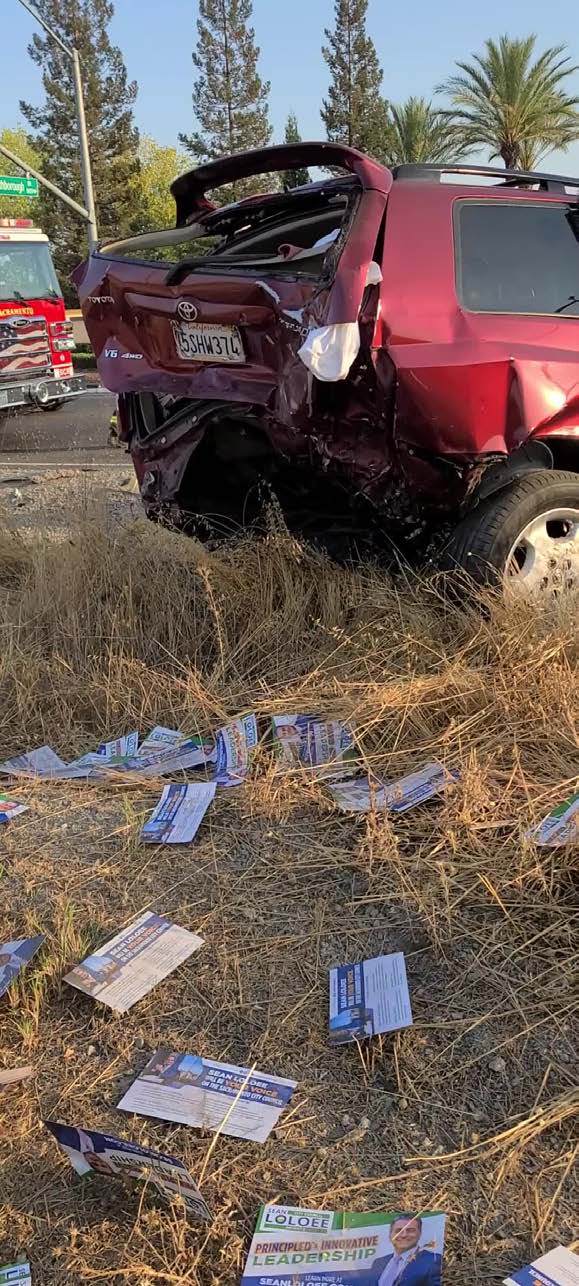
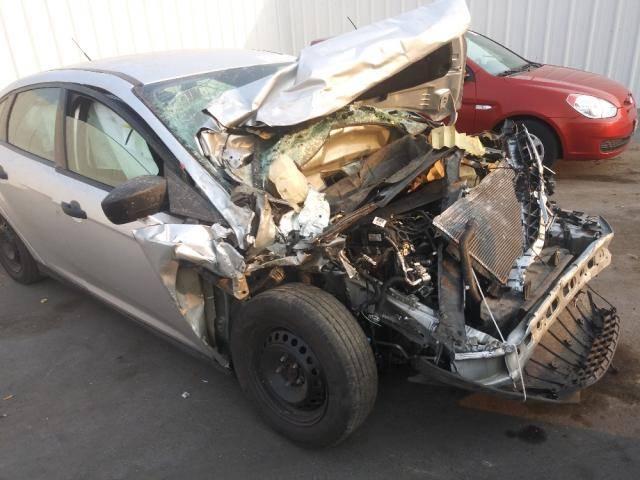
“I had the seatbelt on.”
Jefferson disputes the suggestion that he was unbuckled. He says he fastened his seat belt and has testified under oath that he was wearing it.
The September 27 UC Davis emergency note describes Jefferson as a “restrained passenger.” The note identifies the patient and emergency medical personnel as sources of the history. That is a contemporaneous medical entry relevant to his account; it is not an independent reconstruction of belt use or restraint performance. It should be considered alongside the other evidence rather than treated as the final answer to the dispute.
He points to his experience as an Uber driver—more than 10,000 rides, by his account—and describes wearing a seat belt as a consistent habit. That history does not independently prove belt use in this collision. It explains why he feels so strongly about the allegation.
He also says he heard no warning that the belt was unfastened. What that observation establishes depends on the equipment in this particular vehicle and how it operated; the absence of a warning alone does not settle the dispute.
For him, this is deeply personal. He wants his account considered alongside the physical evidence and the defense’s explanation, rather than having the question reduced to a suggestion he insists is wrong.
When finding a lawyer becomes its own ordeal
Jefferson says two law firms previously worked on the matter and later stopped representing him. He describes those departures as abandonment. The complete withdrawal records and the firms’ explanations have not been reviewed for this feature, so the reasons those relationships ended remain unverified here.
Afterward, he says, came more calls and more requests for help. He reports contacting more than 500 attorneys. That count has not been independently verified.
According to Jefferson, reasons given for declining included timing, proximity to trial, the demands of the litigation, and reluctance to take on Toyota. Those are his recollections, not statements independently obtained from the attorneys.
An attorney declining a matter does not establish whether its allegations are right or wrong. For the person seeking help, however, another unsuccessful inquiry can mean another day of trying to move forward alone.
Jefferson’s supplied third amended complaint identifies him as appearing on his own behalf. Behind those few words is the burden he describes: organizing records, trying to understand proceedings, and finding a way to pay for the next step.
Settled for one. Still unresolved for another.
Jefferson says Toyota settled Garcia’s claim while continuing to contest his. He also says the defense attributed some responsibility to the driver. The publication has not reviewed the settlement agreement or independently established the reasons for the reported resolution.
A settlement in one person’s case does not establish the merits or value of another person’s claim. Different outcomes alone do not prove discrimination.
But Jefferson believes the contrast warrants scrutiny. He calls his concern “consumer discrimination”: his belief that access to representation and resources can determine whose claim reaches a resolution and whose becomes an endurance test.
That is his interpretation. This publication has not established that Toyota’s decisions were motivated by race, insurance coverage, homelessness, or the absence of an attorney.
The question his experience raises does not require readers to assume that motive: what happens when the cost of presenting a case becomes more than an injured person can bear?
Having an opportunity to be heard and having the resources to use that opportunity can feel very different. Jefferson wants people to understand that distance.
144,000 stones. One dollar at a time.
Jefferson says he has exhausted approximately $20,000 pursuing his case. He is now seeking $144,000, describing the effort as “144,000 stones”—one dollar per stone.
He estimates that a minimum of $60,000 is needed for the expenses of reaching trial. The larger goal is intended to support continued litigation and a possible appeal, if needed. These are his reported expenditures and estimates, not independently audited figures or guaranteed future costs.
The idea is that many small contributions could help him keep going when his own resources have run out. His appeal is for help pursuing the case—not a promise of a verdict, settlement, or financial return to contributors.
To support the broader need, donate to Your Unique Definition’s Justice Within Reach Litigation Assistance Fund. This is a separate program fundraiser, not a campaign earmarked for Jefferson’s personal $144,000 goal. The nonprofit selects eligible recipients and controls the use of funds.
Campaign inquiries can be directed to jj@jjvstoyota.com. The planned campaign domain is JJvsToyota.com.
YOUR TURN · KEEP THE CONVERSATION GOING
What should determine who gets a resolution?
When one person from a crash settles and another is still fighting, what should explain the difference—the evidence, legal representation, or the ability to afford the fight?
Different claims can have different evidence and outcomes. But if one person cannot afford to develop and present the evidence, how equal is the opportunity to be heard?
Where do you draw the line between a legitimate difference between claims and unequal treatment—and what evidence would persuade you?
Consider both sides: What facts could reasonably explain different outcomes? What facts would raise concerns about unfair treatment? What would change your mind?
This is a discussion about access and fairness, not a request to decide liability from a cover story. A verdict requires the full evidence and applicable legal instructions.
Send your perspective →Responses are for editorial review. Please say whether we may quote you and how you would like to be credited.
If you were examining the evidence
Jefferson asks readers to imagine evaluating the case. What protection would you expect from a seat and restraint during a collision? What would you want to know before deciding whether that protection was adequate?
A fair evaluation would require the full record: the collision sequence, evidence of belt use, vehicle inspections, medical evidence, expert opinions, the defense’s evidence, and the applicable legal instructions. Photographs and one person’s account cannot replace that process.
Readers do not have to decide liability to recognize the human stakes of that process.
A person can survive a crash and still struggle to find a way forward. Jefferson is asking for the resources to keep pursuing his.
That is where this story continues.
We plan to speak with Jefferson about the collision, his search for counsel, and his fundraising plans. No interview date has been announced. Further coverage can examine supporting documents, the current procedural status, and responses from the people and organizations discussed.
Documents behind this update
The following passages were checked against the supplied records. The complete medical files are not published here because they contain private information.
- UC Davis Health: September 27, 2020 emergency history (PDF page 65), patient summary (page 72), and laceration procedure (page 74); October 2–3, 2020 encounter (pages 13–16).
- Suresh Kumar, M.D.: Comprehensive Opinion Report, dated April 27, 2021, especially pages 2–3 and 7. The report discusses both the earlier injury and subsequent aggravation; some dates in its narrative are inconsistent.
- Spine & Nerve Diagnostic Center: August 31, 2021 consultation, pages 1–4, including the history, MRI review, and recommendations.
- Jefferson’s four-page case summary and supplied video: sources for his account and the footage presented here, rather than independent findings of liability.
The recall packet supplied with the materials includes a November 10, 2022 notice concerning certain seat-belt service parts. Its applicability to the belt in this September 2020 collision has not been established. It is not presented here as proof that this vehicle or belt was recalled.
Reporting notes & disclosure
This feature draws on Jefferson’s account provided to The People’s Fine Print, his supplied four-page case summary, his supplied third amended complaint, the supplied Toyota entities’ answers, medical records reviewed for this update, and photographs and video provided for publication. The filings identify Sacramento Superior Court case numbers 34-2021-00311004 and 34-2022-00325754.
Toyota Motor North America, Toyota Motor Sales, U.S.A., and Toyota Motor Engineering & Manufacturing North America deny the allegations in the supplied answers and assert defenses. Their position is drawn from those filings, not a new interview with this publication. Allegations are not findings of liability.
The reported settlement, comparative access to care, attorney-outreach count, explanations for representation ending, and financial estimates have not been independently verified. The current court docket has not been independently checked for this feature. Private medical files and personal identifiers are not reproduced.
Relationship disclosure: Jefferson has appeared in The Auxilium Firm’s team materials and is associated with the Yaka & JJ Show featured in this publication. The People’s Fine Print is published by The Auxilium Firm.
We welcome documentary corrections and responses at contact@theauxiliumfirm.com. Updated October 4, 2026. Editorial content is not legal advice.